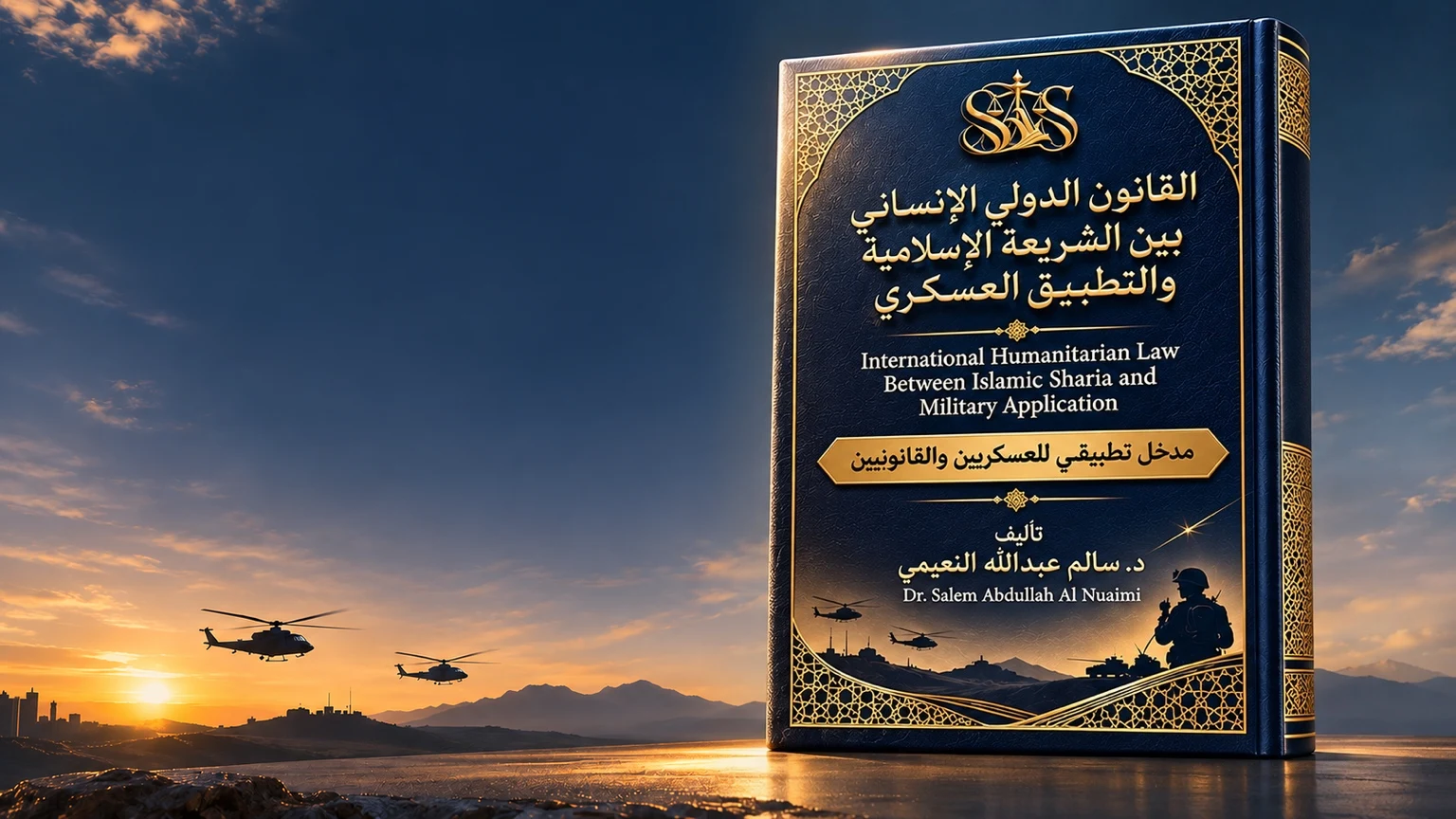
Navy-and-gold cover of the international humanitarian law book against a sunset skyline
Forthcoming manuscript

International Humanitarian Law Between Islamic Sharia and Military Practice

A Practical Introduction for Military Personnel and Legal Professionals

Dr Salem Abdullah Al Nuaimi

Anticipated official release:

Arabic manuscript · 365 pages · 5 parts · 13 chapters

Browse the book Notify me upon release

About the book

The book asks how military personnel and legal professionals can identify the rules that protect people in armed conflict, apply them and assess violations. It begins with the sources of international humanitarian law and the classification of conflicts. It then examines the protection of civilians and civilian objects, the wounded, sick and shipwrecked, prisoners and detainees, with a chapter on people with specific needs, including older persons and persons with disabilities.

The book compares these rules with relevant principles in Islamic Sharia, including the preservation of life, fidelity to agreements and justice towards an adversary. It draws on the Qur’an and the Sahih collections of al-Bukhari and Muslim, explains the limits of the comparison and distinguishes the sources of each body of law. Its legal analysis draws on original treaty texts, customary rules, judicial decisions and national legislation.

Chapters examine the duties of commanders and legal advisers, legal questions raised by new technologies, individual responsibility for war crimes and mechanisms for implementation. The UAE chapter and judicial case studies show how to move from a legal rule to the classification of facts. Review questions and chapter references support university teaching and professional training for officers, legal advisers, law students, military cadets, instructors and trainers.

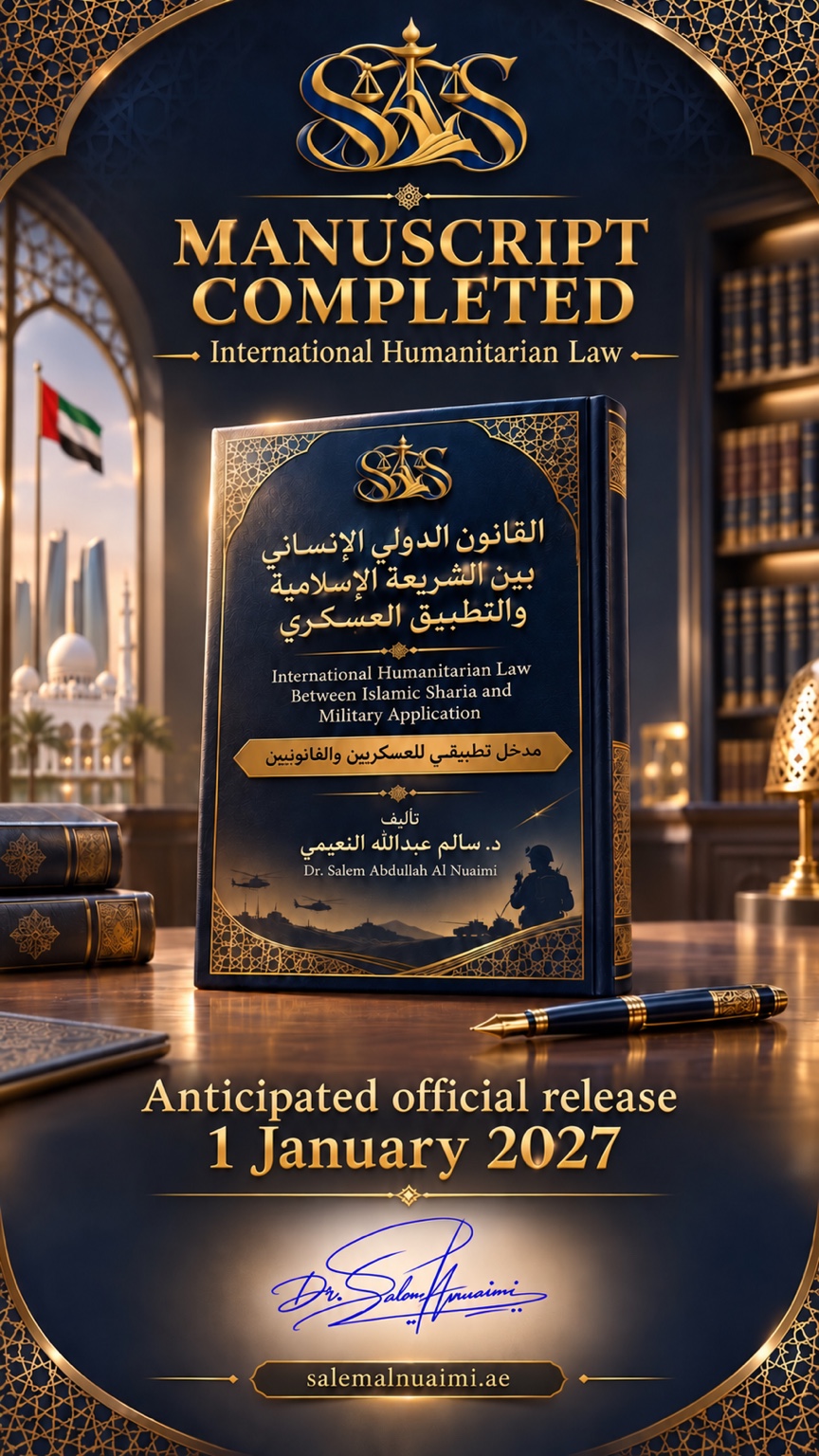
Manuscript completion announcement
Announcement signed by Dr Salem Abdullah Al Nuaimi marking completion of the international humanitarian law manuscript, with release planned for 1 January 2027 View the announcement in the media gallery

Browse the book

The headings, introduction and excerpts are translated from the Arabic manuscript. The original Arabic is available alongside the translations.

Table of contents

  1. Introductionp. 6
  2. Part 1. Theoretical and Legal Frameworkp. 9
  3. Chapter 1. Nature and Development of International Humanitarian Lawp. 10
  4. Chapter 2. Sources and Scope of International Humanitarian Lawp. 28
  5. Chapter 3. Classification of Armed Conflicts and Governing Principlesp. 51
  6. Part 2. Protection of Persons and Objectsp. 68
  7. Chapter 4. Protection of Civilians and Civilian Objectsp. 69
  8. Chapter 5. The Wounded, Sick, Shipwrecked, Prisoners and Detaineesp. 91
  9. Chapter 6. Groups with Specific Needsp. 108
  10. Part 3. International Humanitarian Law in the Military Contextp. 127
  11. Chapter 7. The Conduct of Hostilitiesp. 128
  12. Chapter 8. Responsibilities of Commanders and Legal Advisersp. 147
  13. Part 4. Contemporary Challenges and Legal Accountabilityp. 168
  14. Chapter 9. Modern Technology and International Humanitarian Lawp. 169
  15. Chapter 10. Grave Breaches and War Crimes — Individual Criminal Responsibilityp. 201
  16. Chapter 11. Mechanisms for Implementing International Humanitarian Lawp. 232
  17. Part 5. National Implementation and Case Studiesp. 263
  18. Chapter 12. Implementation of International Humanitarian Law in the United Arab Emiratesp. 264
  19. Chapter 13. Case Studies and Judicial Applications of International Humanitarian Lawp. 300
  20. Conclusionp. 344
  21. Index of Qur’anic Versesp. 347
  22. Index of Prophetic Hadithsp. 351
  23. Index of Cases and Judicial Opinionsp. 355
  24. Glossaryp. 357

Introduction

Read the introduction

International humanitarian law seeks to protect people in the harshest circumstances, when force is already being used. It limits the means and methods of warfare and protects people who take no part in hostilities or have ceased to take part. Its rules have direct consequences for commanders who plan and carry out operations, lawyers who advise them, judges and investigators who deal with accountability, and teachers and trainers who build awareness before conflict occurs.

This book starts with two related questions. How can the rules of international humanitarian law be understood accurately from official sources, avoiding generalisations and unsupported citations? How can they be read alongside the values that Islamic Sharia establishes for warfare, while keeping the sources distinct and avoiding assumptions of equivalence unsupported by the texts? Islamic Sharia establishes principles prohibiting aggression, protecting life and those who do not fight, upholding agreements, and treating adversaries justly. International humanitarian law has developed a system of treaties, customary rules and case law with its own sources, conditions and mechanisms. A careful comparison can deepen ethical and professional understanding when it respects the distinct role of legal analysis.

Intended Audience

The book is addressed principally to military personnel and legal professionals, including officers, commanders, legal advisers in military and security institutions, cadets, law students, teachers and trainers. It is designed for use in university courses or professional training programmes and remains accessible to interested readers from outside these fields.

Method

The analysis draws on original sources, including treaty articles and paragraphs, customary rules of international humanitarian law, international judgments and opinions cited by case number, date and paragraph, and legislation published in official sources. For the Islamic sources, the analysis draws on the Qur’an and the Sahih collections of al-Bukhari and Muslim. It gives hadith numbers, as well as volume and page references where verified in the two editions used. Throughout the book the author includes material verified against its source.

The book distinguishes legal rules, findings in individual cases and scholarly views. It also distinguishes trial and appellate judgments, and dispositive holdings, reasoning and separate opinions. Its scope excludes military operations involving the United Arab Emirates and operational details of hostilities. It addresses rules of engagement at the conceptual level and relies on published sources.

Structure of the Book

The book has five parts and thirteen chapters.

Part One, Theoretical and Legal Framework, comprises Chapters 1–3 on the nature and development of international humanitarian law, its sources and scope, and the classification of armed conflicts and governing principles.

Part Two, Protection of Persons and Objects, comprises Chapters 4–6 on civilians and civilian objects, the wounded, sick, shipwrecked, prisoners and detainees, and groups with specific needs.

Part Three, International Humanitarian Law in the Military Context, comprises Chapters 7–8 on the conduct of hostilities and the responsibilities of commanders and legal advisers.

Part Four, Contemporary Challenges and Legal Accountability, comprises Chapters 9–11 on modern technology, grave breaches and war crimes, and mechanisms for implementation.

Part Five, National Implementation and Case Studies, comprises Chapters 12–13 on implementation in the United Arab Emirates and judicial applications.

How to Use the Book

Each chapter follows a consistent structure. An introduction defines its subject and connects it to earlier material. Sections present and analyse the rules, followed by a comparison with Islamic Sharia, a conclusion, questions for review or discussion, and chapter references. References are numbered separately for each chapter so readers can locate the source of each rule. Longer discussion cases and assessment indicators appear in a separate trainer’s guide, allowing the book to focus on analysis.

Readers are encouraged to follow the chapters in order. Part One introduces the concepts and sources on which the rest of the book builds. The final chapter tests those rules against specific judicial decisions.

Author’s Note

The views expressed are those of the author. The book is an educational reference and cannot substitute for legal advice on a specific case. Information on treaties, legislation and judgments reflects the position at the close of review on 26 November 2026. Official sources should be consulted for subsequent accessions, amendments or judgments.

May God grant success.

Original Arabic introduction

يُعنى القانون الدولي الإنساني بحماية الإنسان في أشد الظروف قسوة، حين يصبح استعمال القوة واقعاً قائماً، فيتجه القانون إلى تقييد وسائل القتال وأساليبه، وحماية من لا يشاركون في الأعمال العدائية أو كفّوا عن المشاركة فيها. وليس هذا القانون ترفاً نظرياً؛ فهو يتصل مباشرة بعمل القائد العسكري في التخطيط والتنفيذ، وبعمل المستشار القانوني في تقديم الرأي، وبعمل القاضي والمحقق في المساءلة، وبعمل المعلم والمدرب في بناء الوعي قبل وقوع النزاع.

وتنبع إشكالية هذا الكتاب من سؤالين متلازمين: كيف تُفهم قواعد القانون الدولي الإنساني فهماً دقيقاً من مصادرها الرسمية، بعيداً عن التعميم والنقل غير الموثق؟ وكيف تُقرأ هذه القواعد في ضوء القيم التي قررتها الشريعة الإسلامية في القتال، دون الخلط بين مصادر الأحكام، ودون افتراض تطابق لا تؤيده النصوص؟ فالشريعة الإسلامية قررت أصولاً راسخة في تحريم الاعتداء، وصيانة النفس، والنهي عن قتل من لا يقاتل، والوفاء بالعهد، والعدل مع الخصم؛ والقانون الدولي الإنساني بنى منظومة اتفاقية وعرفية وقضائية لها مصادرها وشروطها وآليات تطبيقها. والمقارنة المنضبطة بين المنظومتين تثري الوعي الأخلاقي والمهني، شرط أن تبقى مقارنة قيمية لا تحل محل التحليل القانوني.

الفئة المستهدفة

يتوجه الكتاب أساساً إلى العسكريين والقانونيين: الضباط والقادة، والمستشارين القانونيين في المؤسسات العسكرية والأمنية، وطلبة الكليات العسكرية وكليات القانون، والمشتغلين بالتدريب والتعليم في هذا المجال. وقد صيغ ليصلح مقرراً دراسياً جامعياً أو مرجعاً في البرامج التدريبية، مع بقائه مفهوماً للقارئ المهتم من غير المتخصصين.

منهج الكتاب

اعتمد الكتاب المنهج التحليلي القائم على النصوص الأصلية: نصوص الاتفاقيات الدولية بموادها وفقراتها، وقواعد القانون الدولي الإنساني العرفي، والأحكام والآراء القضائية الدولية بأرقام قضاياها وتواريخها وفقراتها، والتشريعات الوطنية المنشورة في مصادرها الرسمية. وفي الجانب الشرعي اقتصر الاستدلال على القرآن الكريم وصحيحي البخاري ومسلم، مع بيان رقم الحديث، وإثبات الجزء والصفحة حيث سبق التحقق منهما في الطبعتين المعتمدتين. والتزم الكتاب قاعدة واحدة في جميع فصوله: لا يُثبت إلا ما تحقق منه المؤلف من مصدره، وما لم يثبت حُذف ولم يُذكر.

ويميز الكتاب في كل موضع بين ما تقرره القاعدة القانونية، وما قررته المحكمة في قضية بعينها، وما يراه الفقه؛ وبين الحكم الابتدائي وحكم الاستئناف؛ وبين المنطوق والأسباب والآراء المنفردة. كما يلتزم بحدود واضحة: فلا يتناول عمليات عسكرية تكون دولة الإمارات العربية المتحدة طرفاً فيها، ولا يقدم تفاصيل تنفيذية للأعمال العدائية، ويعالج قواعد الاشتباك على المستوى المفاهيمي فقط، ويعتمد على المصادر المنشورة دون غيرها.

خطة الكتاب

يتألف الكتاب من خمسة أبواب تضم ثلاثة عشر فصلاً:

الباب الأول: الإطار النظري والقانوني، ويضم الفصول من الأول إلى الثالث: ماهية القانون الدولي الإنساني وتطوره، ومصادره ونطاق تطبيقه، وتصنيف النزاعات المسلحة والمبادئ الحاكمة.

الباب الثاني: حماية الأشخاص والأعيان، ويضم الفصول من الرابع إلى السادس: حماية المدنيين والأعيان المدنية، والجرحى والمرضى والغرقى والأسرى والمحتجزين، والفئات ذات الاحتياجات الخاصة.

الباب الثالث: القانون الدولي الإنساني في البيئة العسكرية، ويضم الفصلين السابع والثامن: ضوابط سير العمليات العدائية، ومسؤوليات القادة والمستشارين القانونيين.

الباب الرابع: التحديات المعاصرة والمساءلة القانونية، ويضم الفصول من التاسع إلى الحادي عشر: التكنولوجيا الحديثة، والانتهاكات الجسيمة وجرائم الحرب، وآليات التنفيذ.

الباب الخامس: التطبيق الوطني ودراسات الحالة، ويضم الفصلين الثاني عشر والثالث عشر: تطبيقات القانون الدولي الإنساني في دولة الإمارات، ودراسات الحالة والتطبيقات القضائية.

طريقة استخدام الكتاب

يقوم كل فصل على قالب ثابت: مقدمة تحدد موضوعه وصلته بما قبله، ثم مباحث تعرض القواعد وتحللها، ثم مقارنة شرعية منضبطة، فخلاصة، وأسئلة للمراجعة أو النقاش، وقائمة بمراجع الفصل. وتأتي المراجع مستقلة في نهاية كل فصل، مرقمة ترقيماً خاصاً به، ليسهل على الدارس الرجوع إلى المصدر الذي بُني عليه كل حكم. وقد نُقلت الحالات النقاشية المطولة ومؤشرات التقييم إلى دليل المدرب المستقل، ليبقى متن الكتاب مركزاً على التحليل.

ويحسن بالدارس أن يقرأ الفصول بترتيبها؛ فالباب الأول يضع المفاهيم والمصادر التي تُبنى عليها الأبواب اللاحقة، والفصل الأخير يختبر ما سبق من قواعد في أحكام قضائية محددة.

تنويه

الآراء الواردة في هذا الكتاب آراء علمية تعبر عن المؤلف، ولا تمثل موقف أي جهة رسمية. والكتاب مرجع تعليمي، لا يقوم مقام الاستشارة القانونية في واقعة بعينها. وقد روعي في المعلومات المتعلقة بالمعاهدات والتشريعات والأحكام حالُها حتى تاريخ إغلاق المراجعة في 26 نوفمبر 2026؛ وما يطرأ بعد ذلك من انضمام أو تعديل أو حكم يُرجع فيه إلى مصادره الرسمية.

والله ولي التوفيق.
Parts and chapters

Part 1. Theoretical and Legal Framework

Introduces the field, the sources of binding rules and how the classification of armed conflicts determines the applicable law.

Chapter 1. Nature and Development of International Humanitarian Law

Defines the field and traces its historical development, including the historical and ethical context of Islamic rules on warfare.

This chapter lays the theoretical foundation for the entire book. It defines this body of law and its terminology, distinguishes it from related branches of law, traces its development into its contemporary form, and presents Islamic rules on warfare as an established historical and ethical precedent.
Original Arabic passage
يضع هذا الفصل الأساس النظري للكتاب كله. فهو يحدد مفهوم هذا القانون وتسمياته، ويميّزه عن فروع القانون القريبة منه، ثم يتتبع مراحل تطوره حتى صورته المعاصرة، ويعرض أحكام الحرب في الشريعة الإسلامية بوصفها سابقة تاريخية وأخلاقية أصيلة.
Chapter 1 introduction, beginning on p. 10
Chapter 2. Sources and Scope of International Humanitarian Law

Examines treaties and customary rules and explains when, where and to whom they apply.

Chapter One explained the nature and development of international humanitarian law. This chapter addresses two practical questions every commander and legal adviser faces. What are the sources of binding rules? When, where and to whom do they apply?
Original Arabic passage
بيّن الفصل الأول ماهية القانون الدولي الإنساني ومراحل تطوره. أما هذا الفصل فيجيب عن سؤالين عمليين يواجههما كل قائد ومستشار قانوني: ما مصادر القاعدة الملزمة؟ وما نطاق تطبيقها زماناً ومكاناً وعلى الأشخاص؟
Chapter 2 introduction, beginning on p. 28
Chapter 3. Classification of Armed Conflicts and Governing Principles

Distinguishes international and non-international armed conflicts and occupation, and explains the principles and legal consequences of classification.

Chapter Two explained the sources and scope of international humanitarian law. This chapter addresses two questions central to determining the legal framework for military operations. Is there an armed conflict in the legal sense? If so, what type of conflict is it?
Original Arabic passage
بيّن الفصل الثاني مصادر القانون الدولي الإنساني ونطاق تطبيقه. أما هذا الفصل فيجيب عن سؤالين أساسيين لتحديد الإطار القانوني للعمليات العسكرية: هل نحن أمام نزاع مسلح بالمعنى القانوني؟ وإذا كان الأمر كذلك، فما نوع هذا النزاع؟
Chapter 3 introduction, beginning on p. 51

Part 2. Protection of Persons and Objects

Examines protection for civilians, those out of combat and groups with specific needs, as well as civilian objects.

Chapter 4. Protection of Civilians and Civilian Objects

Examines safeguards for civilians and civilian objects, including civilians in enemy hands or under occupation.

Chapter Three presented distinction as one of the governing principles.
Original Arabic passage
عرض الفصل الثالث مبدأ التمييز بوصفه أحد المبادئ الحاكمة.
Chapter 4 introduction, beginning on p. 69
Chapter 5. The Wounded, Sick, Shipwrecked, Prisoners and Detainees

Examines care and humane treatment and distinguishes legal status, treatment and the lawfulness of deprivation of liberty.

Chapter Four explained the protection of civilians. This chapter addresses those who are out of combat or have fallen under the authority of their adversary, including persons hors de combat, the wounded, sick and shipwrecked, prisoners and detainees. The common principle is that enmity does not extinguish dignity. Once someone is out of combat, the protections applicable to that person must be respected, and attacks or reprisals against them are impermissible.
Original Arabic passage
بيّن الفصل الرابع حماية المدنيين. وهذا الفصل يتناول من خرج من دائرة القتال أو وقع تحت سلطة خصمه: العاجز عن القتال، والجريح والمريض والغريق، والأسير، والمحتجز. والفكرة الجامعة أن الخصومة لا تُسقط الكرامة، وأن خروج الشخص من القتال يوجب احترام الحماية المقررة له، ولا يبيح الاعتداء عليه أو الانتقام منه.
Chapter 5 introduction, beginning on p. 91
Chapter 6. Groups with Specific Needs

Examines safeguards for women, children, older persons, persons with disabilities, displaced persons and refugees.

Armed conflict does not affect everyone equally. A pregnant woman, a child separated from family, an older person unable to flee, a person with a disability who cannot hear a warning, and a displaced person who has lost their documents are all civilians covered by the general protection described in Chapter Four, but their needs differ.
Original Arabic passage
النزاع المسلح لا يصيب الناس بالتساوي. فالمرأة الحامل، والطفل المنفصل عن أسرته، والمسنّ الذي لا يستطيع الفرار، والشخص ذو الإعاقة الذي لا يسمع الإنذار، والنازح الذي فقد وثائقه، كلهم مدنيون تشملهم الحماية العامة التي بيّنها الفصل الرابع، لكن حاجتهم مختلفة.
Chapter 6 introduction, beginning on p. 108

Part 3. International Humanitarian Law in the Military Context

Examines the legal limits on hostilities and the preventive duties of commanders and legal advisers.

Chapter 7. The Conduct of Hostilities

Explains the legal limits on hostilities, including distinction, proportionality and precautions, in the context of civilian protection.

This section rests on a longstanding principle in Article 22 of the 1907 Hague Regulations: the right of belligerents to adopt means of injuring the enemy is not unlimited [4]. Article 35(1) of Additional Protocol I reaffirmed it [1].
Original Arabic passage
ويقوم هذا الجزء على أصل قديم قرّرته المادة 22 من لائحة لاهاي لعام 1907: حق المتحاربين في اختيار وسائل الإضرار بالعدو ليس حقاً لا تقيده قيود [4]، وأعادت تأكيده المادة 35(1) من البروتوكول الأول [1].
Chapter 7 introduction, beginning on p. 128
Chapter 8. Responsibilities of Commanders and Legal Advisers

Examines prevention, training and oversight duties and the role of legal advice within military institutions.

Ratification alone does not give effect to the rules of international humanitarian law. Someone must translate them into orders, training and oversight within military units. The 1949 Geneva Conventions and 1977 Additional Protocol I therefore imposed specific implementation duties on states and gave military commanders and legal advisers central roles in implementation.
Original Arabic passage
لا تتحقق قواعد القانون الدولي الإنساني بمجرد التصديق عليها؛ فهي تحتاج إلى من يحوّلها إلى أوامر وتدريب ورقابة داخل الوحدة العسكرية. ولهذا وضعت اتفاقيات جنيف لعام 1949 والبروتوكول الإضافي الأول لعام 1977 على عاتق الدول التزامات تنفيذية محددة، وجعلت القائد العسكري والمستشار القانوني حلقتين أساسيتين في سلسلة التطبيق.
Chapter 8 introduction, beginning on p. 147

Part 4. Contemporary Challenges and Legal Accountability

Covers emerging technologies, individual criminal responsibility and mechanisms for enforcing the law.

Chapter 9. Modern Technology and International Humanitarian Law

Analyses legal obligations raised by emerging technologies, including artificial intelligence, autonomous systems and cyber operations.

International humanitarian law does not address technology as an entity independent of human beings. It regulates conduct and the obligations of states, parties to conflicts and the people concerned. The chapter therefore examines the structure of the legal obligations that apply to new technology.
Original Arabic passage
والقانون الدولي الإنساني لا يخاطب التكنولوجيا بوصفها كياناً مستقلاً عن الإنسان، بل ينظم السلوك والالتزامات التي تقع على الدول وأطراف النزاعات والأشخاص المعنيين. ولذلك تتجاوز الدراسة مجرد وصف الوسائل الجديدة إلى بيان بنية الالتزامات القانونية التي تنطبق عليها.
Chapter 9 introduction, beginning on p. 169
Chapter 10. Grave Breaches and War Crimes — Individual Criminal Responsibility

Distinguishes grave breaches and war crimes and examines the elements of crimes and grounds for individual responsibility.

This chapter examines the criminal consequences of violating international humanitarian law, including when a breach constitutes an international crime, who can be held responsible and under what conditions.
Original Arabic passage
يتناول هذا الفصل الأثر الجنائي للإخلال بقواعد القانون الدولي الإنساني: متى يصبح الانتهاك جريمة دولية، ومن يُسأل عنها، وبأي شروط.
Chapter 10 introduction, beginning on p. 201
Chapter 11. Mechanisms for Implementing International Humanitarian Law

Examines oversight, state responsibility, investigation and prosecution, fair trial guarantees and reparations.

The effectiveness of international humanitarian law depends on turning its protective rules into enforceable obligations and on institutions able to monitor compliance and address the consequences of violations. Implementation begins before conflict with legislative and institutional preparation, continues during conflict through oversight and compliance, and extends beyond it through prosecution and reparation, depending on the nature of the obligation. Adopting international rules is insufficient without legal and institutional means to put them into effect.
Original Arabic passage
تتوقف فعالية القانون الدولي الإنساني على تحويل قواعد الحماية إلى التزامات قابلة للتنفيذ، وعلى وجود مؤسسات تستطيع التحقق من احترامها ومعالجة آثار مخالفتها. ويبدأ التنفيذ قبل النزاع بالاستعداد التشريعي والمؤسسي، ويستمر أثناء النزاع بالرقابة والامتثال، وبعده بالملاحقة والجبر، بحسب طبيعة الالتزام. ولا يكفي اعتماد النصوص الدولية إذا لم تتوافر وسائل قانونية ومؤسسية تتيح تطبيقها.
Chapter 11 introduction, beginning on p. 232

Part 5. National Implementation and Case Studies

Connects legal rules to the UAE’s national framework and to selected international judicial decisions.

Chapter 12. Implementation of International Humanitarian Law in the United Arab Emirates

Analyses national legislation, institutions, dissemination and humanitarian work using published sources.

National implementation is the link between international obligations and domestic law and institutions.
Original Arabic passage
يمثل التطبيق الوطني الحلقة التي تصل بين الالتزام الدولي والواقع القانوني والمؤسسي.
Chapter 12 introduction, beginning on p. 264
Chapter 13. Case Studies and Judicial Applications of International Humanitarian Law

Uses five judicial studies to connect legal rules with facts, evidence, responsibility, sentencing and reparation.

The importance of international humanitarian law becomes clear when its rules are applied to facts and courts interpret the scope of protection and responsibility.
Original Arabic passage
تتجلى أهمية القانون الدولي الإنساني في تطبيق قواعده على الوقائع، وفي تفسير القضاء لحدود الحماية والمسؤولية.
Chapter 13 introduction, beginning on p. 300

Conclusion and indexes

  • Conclusionp. 344
  • Index of Qur’anic Versesp. 347
  • Index of Prophetic Hadithsp. 351
  • Index of Cases and Judicial Opinionsp. 355
  • Glossaryp. 357