 Dr Salem Abdullah Al Nuaimi
Women after sixty: a place in everyday life
DOI · 10.5281/zenodo.24019809 Zenodo · 24019809 ResearchGate · 417571809 ORCID · 0009-0005-5561-5023
View the full article as PDF Download PDF
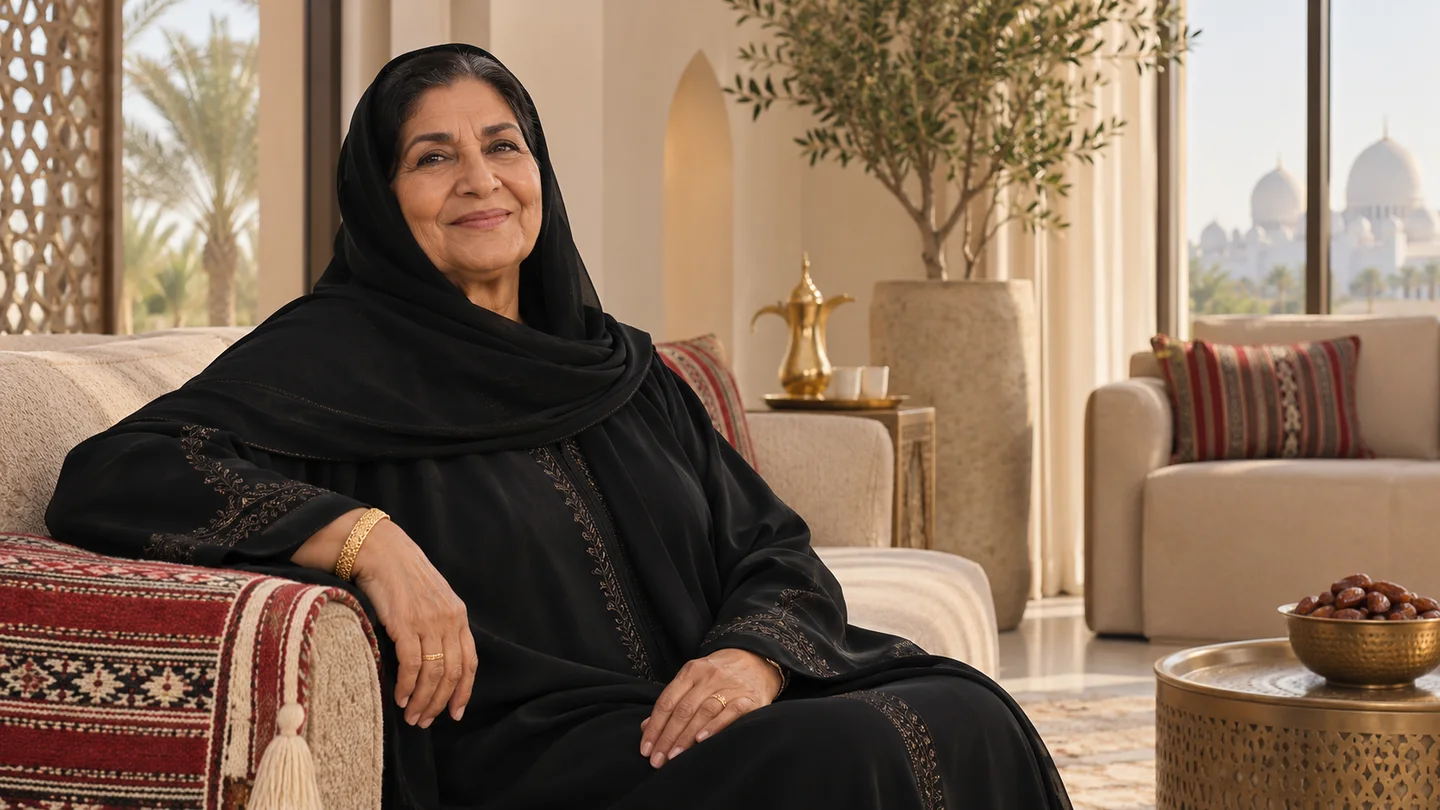
On a quiet morning in Al Ain, a sixty-five-year-old woman gets up early, as she has for forty years. She makes coffee and sits by a window overlooking the little garden she has tended for years. She waits for a call from her daughter, a visit from a grandchild, or a piece of news to break the quiet. On Friday evening, her children and grandchildren fill the house. They ask her about the family's first home and an old quarrel she helped settle. In that same majlis, they agree on the date of their next visit without asking whether it suits her.
Many mothers and grandmothers know this contrast. Their families speak of them with respect, yet gradually involve them less in decisions about their own lives. A woman over sixty has experience, responsibilities and needs of her own. She has the right to decide how she wants to live these years.
Her place in the family
Religion and custom both help explain the place mothers and grandmothers hold in Emirati families. A grandmother remembers where the family started, who married whom and who made peace after years of disagreement. In many homes, she still knows best how to make harees, prepare the majlis and welcome guests. When she tells her grandchildren about relatives and places at Eid, she gives them a connection to people they never met and to a history they can call their own.
That place can become ceremonial without anyone noticing. The family gives her the seat of honour and kisses her forehead, then decides in her absence where and with whom she will live or how to handle her health and finances. Sometimes people talk about her while she is sitting with them. Even with the best of intentions, taking decisions out of her hands turns care into control.
Respect shows up in ordinary choices. Ask what she thinks about a granddaughter's marriage, the sale of a house or a quarrel between siblings, and take her answer seriously either way. Some mothers enjoy hosting the family every week. Others have hosted for years and would welcome a rota. Looking after grandchildren can be a joy, too, until it becomes a daily duty nobody asked her to take on.
When the rhythm of life changes
Many women of this generation helped build the country's institutions as teachers, nurses or office workers. Retirement changes the shape of their days. Children may move into homes of their own, leave for another emirate or go abroad to study. A woman may lose her husband or find herself caring for him just when she thought her years of caregiving were behind her. She may also lose lifelong friends, one by one.
A woman who spent decades known as someone's mother and running a busy household can suddenly find that her day has little structure. Family members may see this as a welcome rest and tell her, “You've done enough, Mum. Take it easy.” Rest can feel like being put aside when everyone else decides it for her.
Women respond differently to these changes. One might enjoy the quiet of an empty house at first, then miss a casual chat in the evening. Another might miss her colleagues and their conversations over a break. Others welcome the time to join a Quran study circle, volunteer with a women's association, return to crafts they learned in childhood such as talli, sadu or palm-frond weaving, or simply spend a morning as they please. What one woman finds enjoyable may feel like an obligation to another. Ask what she wants before making plans for her.
Health and independence
As women grow older, their health needs change. Joints may hurt, and many women need regular checks on blood pressure, blood sugar, heart and bone health, and eyesight. Many mothers learned to put other people's health first and put up with pain. A woman may postpone an appointment or keep quiet about what hurts because she does not want to trouble anyone. That can make the problem harder to treat.
Family members can pay attention to changes in how she walks, repeated lapses in memory or a loss of appetite. They can offer to accompany her to an appointment and respect her privacy. Some women prefer a female doctor. Others feel more comfortable with a daughter than a son in the room. The clinician should address the woman herself and give her time to explain what she feels and ask questions, even when someone comes with her.
Good care also helps her manage her own affairs. She might need transport that fits her schedule, somewhere safe and comfortable to walk, or someone patient enough to show her how to book an appointment on her phone or video-call a grandchild studying abroad. She should be able to go out, visit friends, shop and make choices. Support from her family can make those things easier.
Emotional and social needs
Emotional difficulties can be harder to spot than physical ones. Depression can show up as a gradual withdrawal. She may speak less, sleep poorly or lose interest in things she used to enjoy. Families sometimes put these changes down to age or a low mood. When they persist, it makes sense to bring them to a doctor's attention, just as they would a physical symptom.
A woman can feel lonely in a house full of children and grandchildren absorbed in their phones. On a hurried call, she may say everything is fine while missing the company she used to have. A busy weekend of visits can give way to a quiet week. “When would you like us to get together this week?” gives her room to say what she wants. It may be an outing with a friend, a regular date with a granddaughter or a morning to herself.
She also needs relationships beyond her immediate family. There are the friends who shared years of weddings and celebrations, the former neighbours from her old neighbourhood, and people she could meet at women's clubs and community centres. Those connections can matter especially if she leaves her old home to live with a son or daughter in an area where she knows nobody. She may welcome a chance to go out or learn something new if someone asks.
What her experience offers the community
Emirati women now over sixty lived through a period of rapid change. They remember simpler homes and saw modern cities grow. They raised families as schools, customs and daily life changed around them. Much of what we recognise as national identity lives in their memories, from sayings and Eid recipes to family ties and the ways neighbours used to settle disputes.
Given the chance, each woman can share that experience on her own terms. At a neighbourhood majlis, one might recall how neighbours shared childcare and ask which parts of that practice could still work today. A retired teacher could help a younger colleague think through a difficult situation with a pupil. A former business owner could tell new entrepreneurs what she learned about dealing with customers. A grandmother could pass on palm-frond weaving or sadu to her granddaughter. The woman herself might go to the majlis to learn a skill or meet someone who shares her interests.
Community centres and majlises can make participation easier by providing accessible spaces and letting women choose what they take part in and how. That gives the community the benefit of their experience and gives the women room to keep contributing.
At the next family gathering
Women over sixty helped families through difficult years and raised many of the people we now celebrate for their achievements. We can recognise that contribution by listening to their views, looking after their health, respecting their independence and making room for what they know.
Call first sometimes. Ask what she thinks as well as how she feels. When something troubles her, give her time to tell you about it. At the next family gathering, ask which date suits her and what she would like to do with her day. She may choose to have everyone over for lunch, go out with a friend or keep the morning free. When her choice finds a place in the family's plans, she can feel their respect in the course of an ordinary day.
Disclaimer and Legal Rights
This article is provided for awareness and general knowledge only. It does not constitute legal advice and is no substitute for consulting specialists or the relevant official authorities. The views expressed are the author’s own and do not necessarily represent the position of any official body.
All rights reserved to the author © 2026. This article may not be copied or republished, in whole or in part, without prior written permission, with the source cited: salemalnuaimi.ae
Dr Salem Abdullah Al Nuaimi — Author · salemalnuaimi.ae · info@salemalnuaimi.ae